XB-5
Alhassan Nawar
Comparative Architecture


Exterior

Interior

Q2.American Embassy Vienna Walter Gropius.

-
The Embassy Building, completed July 4, 1961, was two and one-half years in construction, at a cost of $1,500,000. All of the wooden furniture was made in Greece, from American designs, by the Sarides Company of Athens, which has made furniture for Embassies of many nations throughout the world. All the fabrics used in the upholstered furniture were created in the United States. Nearly 350 Greek engineers, craftsmen and workmen were employed during the construction of the building.
-
Priority was given to the use of local materials. All the marble, cement, tile and plastering materials are Greek products. Most of the fabricated materials came from Western Europe. The items imported form the United States were mainly machinery, such as the air-conditioning, heating and ventilating equipment, pumps and transformers.



-
The building was designed by Walter Gropius and “The Architects Collaborative Inc.” of Cambridge, Massachusetts, USA. It was constructed by the “Albertis-Demopoulos Construction Co.” of Athens.
-
The Chancery is in the shape of a perfect square with a center court, enclosing a planted area and fountain. Exterior and interior columns, of Greek inspiration, are utilized to support giant horizontal crossbeams. The building is constructed of steel and reinforced concrete and is air-conditioned. Specially designed steel hangers are attached to these beams which suspend (hang) the second and third floors of the three-story building. A kind of cradle effect is thus achieved, ensuring “give” in the event of a seismic tremor.
-
The marble of the building is as classic as its architectural style. Most of it is the famous white marble from Mt. Penteli. Black marble from Saint Peter, Peloponnesus, gray marble from Marathon and other native Greek marbles are used throughout the building. The beautifully turned wooded stair railing were made with Greek pearwood by Greek artisans.


Q3.Pompidou Center Richard Rogers and Renzo Piano.


In the 1970′s architects Renzo Piano and Richard Rogers, both unknown at the time, collaborated and erected one of the most famous and radical buildings of our time, Centre Georges Pompidou. The cultural center in Paris, France turned our world inside out, literally. It all began with Georges Pompidou, President of France from 1969 to 1974, who wanted to construct a cultural center in Paris that would attract visitors and be a monumental aspect of the city. Receiving more than 150 million visitors since is completion thirty three years ago, there is no doubt that Pompidou’s vision became a successful reality.


Q4.Jean-Marie Tjibaou Cultural Center in Caledonia.

Renzo Piano’s JM Tjibaou Cultural Center is located in New Caledonia, an island in the South Pacific about 1600 km east of Australia. The project site is on a thin peninsula near Noumea, where on the bay side are the building’s ten wooden cases with their curved facades facing the prevalent winds from the ocean.


Q5.Waterloo Station.


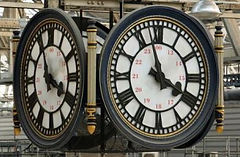
Waterloo Station (Nicholas Grimshaw 1993) Layer for underground trains, 2 layers of service & facilities for passengers and a top layer for city trains and a basement car park
-roof that responds to the site
-cladded roof with glass
-serves 15 million passenger per year




Q6.song or poem about architecture.
العمارة ...نهج ودين
نبني بالعلم عمارة .... منبعها جذور الحضارة
يمشي عليها سائر الاجيال ....على اثرها كعبة مشرفة
ومسجد في طيبة بناه سيدنا .... لندرك بالدين سبب خلقنا
وعلى حمل الامانة كنى .... لنطلب من المولى جنه
(قال عز وجل(هو انشأكم من الارض واستعمركم فيها
Q7.Vienna Jewlery Gallery.
SCHULLIN I
Jewellery Store | Vienna | Austria
Planning: 1972 - 1974 Completion: 1974


SCHULLIN II
Jewellery Store | Vienna | Austria
Planning: 1981 - 1982 Completion: 1982


Q8.The National Library of France.


-
The National Library of France traces its origin to the royal library founded at the Louvre Palace by Charles V in 1368.
-
Charles had received a collection of manuscripts from his predecessor, John II, and transferred them to the Louvre from the Palais de la Cité.
-
The first librarian of record was Claude Mallet, the king's valet de chambre, who made a sort of catalogue, Inventoire des Livres du Roy nostre Seigneur estans au Chastel du Louvre.
zones of plan


Q9.Water Temple .


The Water Temple is the residence of Ninnaji Shingon, the oldest sect of Tantric Buddhism in Japan, founded in 815. Few projects of Tadao Ando are better than this work; the architect's contribution to the culture of their country. More than just a building, it is a sensory experience that represents a radical change in the Millenary tradition of building temples in Japan.


Q10. Eva Jiricna stairs, Joseph retail shops.

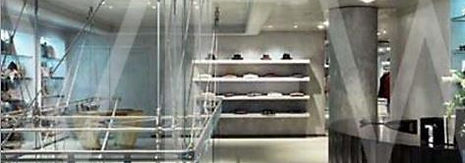
Joseph took over a unit of three different sized floors, totalling 800 sq.m. The existing geometry was unworkable and incoherent, with limited shopfront in relation to the shop’s size. Also the existing spiral staircase was located in a position which neither assisted circulation nor complied with building regulations. Re-locating the stair to the centre of the ground floor was a device to ease circulation, free up previously constrained floor space, and act as a sculptural focus as well as creating a clear orientation link between all levels. A limited palette of materials was selected for the finishes, to achieve a neutral background against which the merchandise would shine. Completed 1989


Q11. Minimalism architecture Evolution .
1- Concepts and design elements
The concept of minimalist architecture is to strip everything down to its essential quality and achieve simplicity.
2- Influences from Japanese tradition
The idea of simplicity appears in many cultures, especially the Japanese traditional culture of Zen Philosophy.
3- Minimalist architects and their works
The Japanese minimalist architect, Tadao Ando conveys the Japanese traditional spirit and his own perception of nature in his works. His design concepts are materials, pure geometry and nature.

Q12. Metabolism Architecture .
1- Fixed spaces It is fixed to use spaces and not a variable like Aquar movement, services, places of exchange
2- Changing spaces And is used varies from time to time, such as housing units.
3- Sustainability of buildings May
